
DIY website builders promise a fast and affordable way to get online. For many businesses, that sounds like the perfect solution.
But once the website is live, the real problem starts, it doesn’t generate traffic, leads, or consistent business results.
A website that simply exists is not enough. For most businesses, the goal is to attract customers and convert them into inquiries. When that doesn’t happen, the website becomes a cost instead of an asset.
DIY website builders hurt your business because they limit SEO performance, customization, and lead generation. Compared to platforms like WordPress or custom-built websites, they provide less control over website structure, optimization, and conversion-focused design, making it harder to attract and convert customers.
Here are following reasons why DIY website builders might be hurting your business :
1-Lack of Lead Generation
2- SEO Limitations
3- Template Design Issues
4- Lack of Conversion Structure
5- Scalability Issues
6- Performance Issues
1- Lack of Lead Generation
Most DIY websites look acceptable on the surface. They load, they display content, and they represent the business.
But they don’t perform.
According to WordStream, average website conversion rates are only 2–5%, and poorly structured websites perform even lower. This means the majority of visitors leave without taking any action.
The issue is not just design—it’s functionality. DIY website builders are designed to help you create pages quickly, not to build systems that generate leads.
This results in low traffic from search engine and when the traffic is low, you will have minimal engagement with your potential clients or buyers, and eventually you will lose good leads.
A website that doesn’t generate leads is not supporting your business growth. It is simply occupying space online.
2- SEO Limitations
One of the biggest issues with DIY website builders is limited SEO capability.
Search engine optimization is what allows your website to appear when potential customers search for services. Without it, your website remains invisible.
Most website builders restrict your ability to fully optimize your site. This includes limited control over:
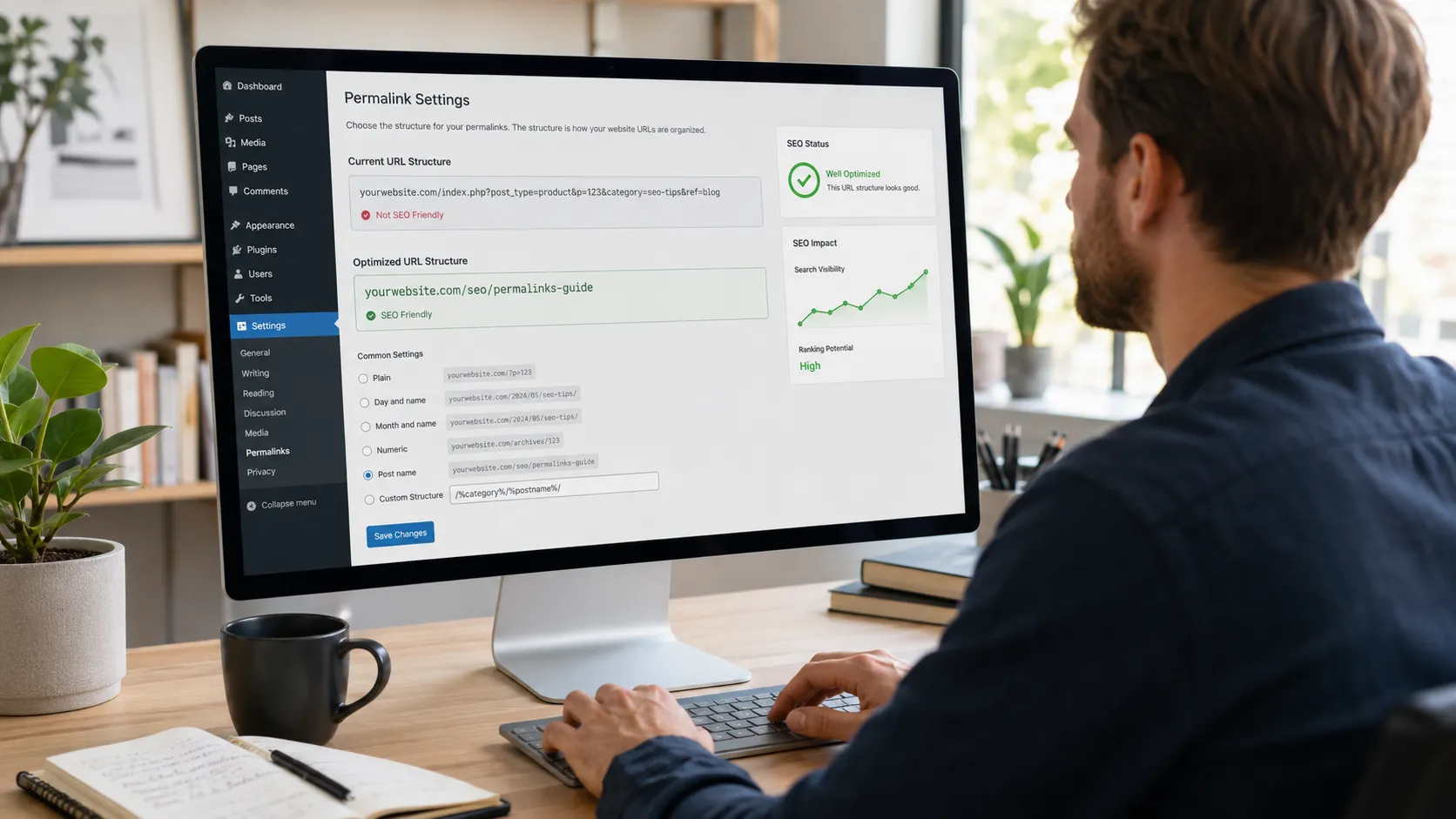
- URL structure
- Technical SEO settings
- Internal linking strategies
These limitations make it harder for search engines to understand and rank your website.
Performance is another issue. Google reports that 53% of users leave a website if it takes longer than 3 seconds to load. Many DIY platforms rely on heavy templates and shared hosting environments, which can slow down performance and negatively impact rankings.
In contrast, platforms like WordPress allow businesses to implement proper SEO structures and optimize their websites for long-term growth.
3- Template Design Issues
Another major limitation of DIY website builders is design flexibility.
Most of these platforms rely on pre-built templates. While this makes setup easier, it also creates a problem: your website ends up looking like many others.
These templates follow similar layouts, structures, and design patterns. As a result, businesses struggle to create a strong visual identity.
From a customer’s perspective, this matters.
When multiple businesses in the same industry have similar-looking websites, it becomes difficult to distinguish between them. This reduces trust and weakens brand perception. And if you don’t come across to your customer as distinguished and trustworthy, they won’t be buying from you.
If your website does not clearly communicate what makes your business different, potential customers are more likely to move on to a competitor.
4- Lack of Conversion Structure
Since they don’t follow WordPress best practices, their websites lack a proper conversion structure — which ultimately results in lower conversions.
A high-performing website is designed to guide users toward action. DIY websites, however, are typically built to display information rather than convert visitors into leads.
This results in a lack of:
- Clear calls-to-action
- Structured landing pages
- Lead capture funnels
According to WordStream, landing pages convert at an average rate of 9.7%, significantly higher than general website pages. This illustrates the importance of focused, conversion-driven design.
Without this structure, visitors may browse your website but leave without contacting your business.
Most DIY websites do not guide users toward the next step. As a result, opportunities are lost even when visitors are interested.
A website builder can help you create pages, but it does not help you create a system that turns visitors into customers. For the full trade-off, read professional versus DIY design.
5- Scalability Issues
DIY website builders often work in the early stages of a business. But as soon as growth becomes a priority, their limitations start to appear.
As businesses expand, they typically need:
- Advanced landing pages
- Integrations with CRM or email tools
- Analytics and tracking
- Custom features
Most website builders restrict these capabilities or make them difficult to implement.
This creates a bottleneck. The website that once seemed sufficient is no longer able to support the business.
The result is a common pattern—businesses outgrow the platform and are forced to rebuild their website from scratch.
This leads to higher costs, lost time, and missed opportunities.
6- Performance Issues
Website performance is not just a technical factor—it directly affects how users interact with your business.
Google reports that 53% of users abandon a website if it takes longer than 3 seconds to load. This means speed has a direct impact on engagement and conversion.
DIY website builders often struggle with performance because they rely on:
- Pre-built, heavy templates
- Shared hosting environments
- Inefficient code structures
These factors can slow down websites, especially as more features and content are added.
A slow website creates friction. Users become frustrated and leave before exploring your services or taking action.
Improving speed is not just about user experience—it is essential for both SEO and conversions.
Website Builder vs WordPress vs Custom Website
At some point, the limitation of DIY website builders becomes clear when compared to more flexible platforms.
| Feature | Website Builders | WordPress | Custom Website |
|---|---|---|---|
| SEO Control | Limited | Advanced | Fully optimized |
| Customization | Restricted | Flexible | Full control |
| Scalability | Limited | Strong | Unlimited |
| Lead Generation | Weak | Strong | Optimized |
Website builders are designed for speed and simplicity. They help you launch quickly, but they are not built to support long-term growth.
WordPress offers greater flexibility, allowing businesses to improve SEO, add features, and optimize for conversions over time. Custom websites go even further by tailoring every element to business goals and user behavior.
The difference is not just technical; it directly impacts how many leads your website can generate.
When a DIY Website Builder Might Be Enough
DIY website builders are not always the wrong choice. They can be useful when the goal is simply to create an online presence without focusing on performance or growth.
For example, they work well for personal websites, hobby projects, or simple informational pages where there is no need to generate leads or compete in search results. In these situations, the website exists to share information rather than drive business outcomes.
The limitation becomes clear when the role of the website changes. Once a website is expected to attract customers, generate inquiries, or support marketing efforts, basic builders often fall short. They are not designed to handle structured SEO, conversion-focused design, or scalable functionality.
At that point, the website needs to do more than exist. It needs to perform.
Why Businesses Switch to WordPress or Custom Websites
Most businesses do not move away from DIY builders immediately. They start with them because they are quick to set up and easy to manage. The shift usually happens later, when results do not match expectations.
The turning point comes when businesses realize that their website is not bringing in traffic or generating inquiries. Even with effort, visibility remains low and conversions remain limited. Attempts to improve SEO or add new features often run into platform restrictions.
As these limitations become more apparent, businesses begin looking for solutions that offer more control and flexibility. WordPress is often the next step because it allows for better structure, stronger SEO capabilities, and the ability to expand over time.
Businesses that invest in improving website functionality and performance often see a clear difference in results. The change is not just technical. It reflects a shift in how the website is used—from a basic online presence to a system built to support growth. If a DIY builder is holding you back, switching to a professionally built site instead gives you room to grow.
Signs Your Website Builder Is Holding You Back
Many businesses continue using website builders without realizing that their website is limiting their growth. However, there are clear signs that indicate a problem.
| Sign | Meaning | Impact |
|---|---|---|
| Low traffic | Weak SEO structure | Missed opportunities |
| Few inquiries | Poor conversion design | Lost revenue |
| Slow website | Performance issues | High bounce rate |
| Limited features | Platform restrictions | Growth blocked |
These issues often develop gradually, which makes them easy to overlook. Over time, however, they have a significant impact on business performance.
Recognizing these signs early allows businesses to take action before losing more opportunities.
Frequently Asked Questions
Are website builders bad for business?
Not necessarily. They are useful for simple projects, but they often limit growth, SEO performance, and lead generation for businesses.
Is WordPress better than website builders?
WordPress offers greater flexibility, better SEO capabilities, and more customization options, making it more suitable for business websites.
Can DIY websites rank on Google?
They can, but they often struggle to compete with websites that are fully optimized for SEO and performance.
When should I upgrade from a website builder?
When your website is not generating traffic, leads, or supporting business growth, it may be time to upgrade.
Is hiring a web designer worth it?
For businesses focused on growth, a professionally designed website often provides better long-term value.
Conclusion
DIY website builders offer convenience, but they often fall short when it comes to performance and growth.
While they can help businesses launch quickly, they are not designed to support SEO, conversion optimization, or long-term scalability.
A website that does not generate results is not saving money—it is limiting opportunities.
Businesses that move toward more flexible platforms such as WordPress or custom-built websites gain the ability to attract traffic, convert visitors, and grow consistently over time.